
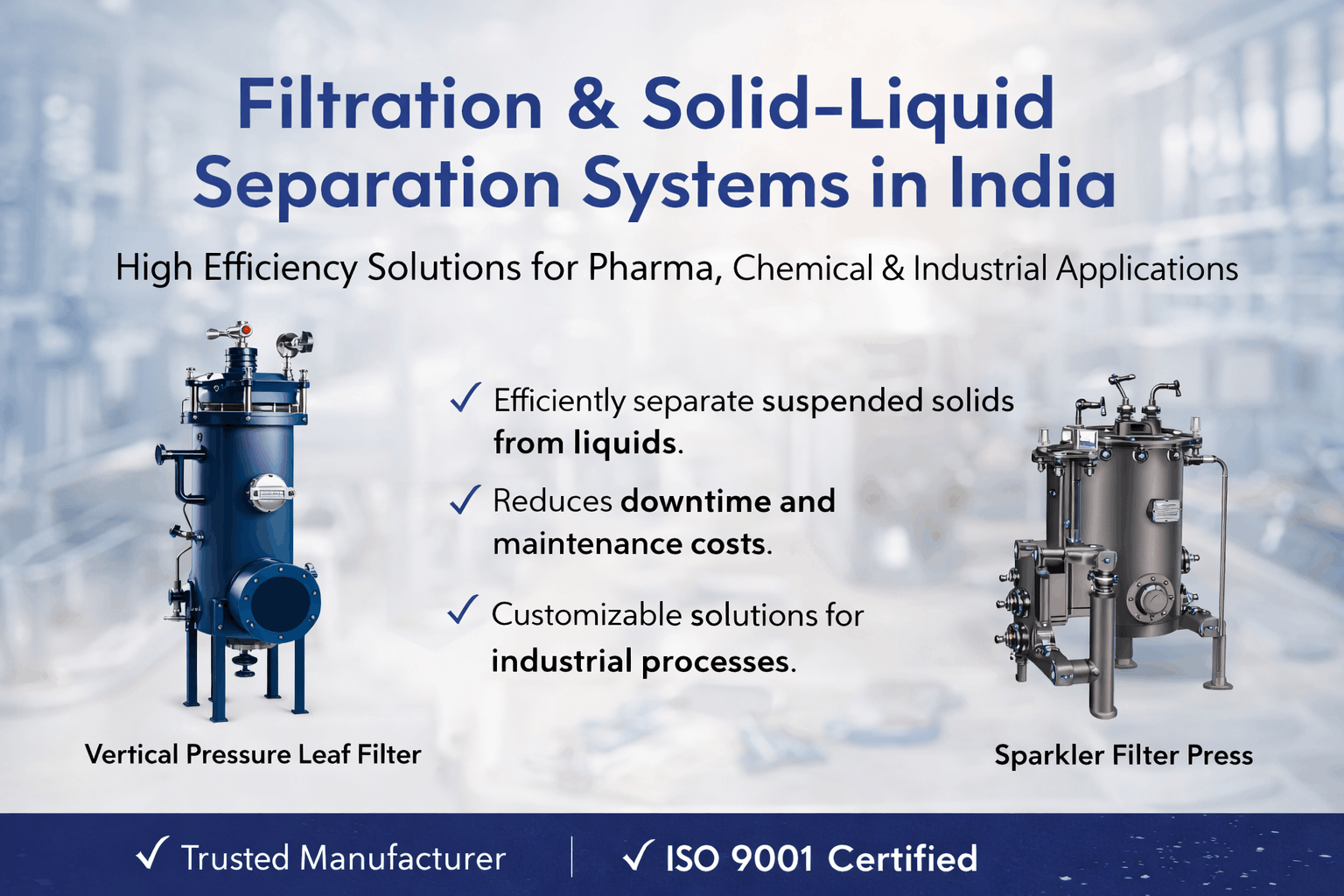
In modern industrial processes, maintaining product purity and operational efficiency is critical. This is where filtration and solid liquid separation systems play a vital role. From pharmaceutical production to chemical processing and water treatment, these systems ensure the removal of suspended solids, improving both quality and process reliability.
Industrial filtration is not just about removing impurities — it directly impacts productivity, compliance, and cost-efficiency. In this detailed guide, we will explore how industrial filtration systems work, their types, applications, and why they are essential for industries across India.
What Are Filtration and Solid Liquid Separation Systems?
Filtration and separation systems are designed to separate solid particles from liquids using various physical and mechanical methods. These systems are widely used where liquid purity, clarity, and contamination control are important.
A solid liquid separation equipment typically works by passing liquid through a filter medium, where solid particles are retained while the clean liquid passes through. Depending on the process requirement, different technologies are used.
Types of Industrial Filtration Systems
1. Pressure Leaf Filters
Pressure leaf filters are widely used in industries that require high clarity filtration. They consist of multiple filter leaves enclosed in a pressure vessel. These systems are ideal for continuous operation and provide efficient solid-liquid separation.
2. Sparkler Filters
Sparkler filter presses are commonly used in pharmaceutical and chemical industries. They provide precise filtration with multiple plates and are suitable for batch processing.
3. Cartridge Filters
Cartridge filters are used for fine filtration and polishing applications. They are compact and easy to maintain, making them ideal for industries requiring high-purity output.
4. Bag Filters
Bag filters are simple yet effective systems used for removing larger particles. They are cost-effective and suitable for pre-filtration processes.
How Industrial Filtration Systems Work
The working principle of industrial filtration systems depends on the type of filter used, but the basic concept remains the same:
- Liquid containing suspended solids enters the filtration unit
- The filter medium traps solid particles
- Clean liquid passes through and is collected
- Collected solids are removed periodically
Advanced systems are designed to operate under pressure or vacuum conditions, ensuring faster filtration and higher efficiency.
Applications of Solid Liquid Separation Systems
Filtration systems are essential in multiple industries. Some major applications include:
- Pharmaceutical Industry: Ensuring sterile and contamination-free production
- Chemical Processing: Removing impurities from chemicals
- Food & Beverage: Maintaining product clarity and safety
- Water Treatment: Purifying wastewater and drinking water
- Oil & Petrochemical: Separating solids from oils and fuels
A solid liquid separation system for pharmaceutical industry is especially critical, as it ensures compliance with strict quality and hygiene standards.
Key Benefits of Industrial Filtration Systems
- Improved product quality and purity
- Reduced downtime and maintenance
- Higher process efficiency
- Cost savings in long-term operations
- Compliance with industry regulations
Industries looking for long-term performance often rely on a filtration system manufacturer in India that offers durable and efficient solutions for different applications.
Choosing the Right Filtration System
Selecting the right filtration system depends on several factors:
- Type and size of solid particles
- Flow rate requirements
- Operating pressure and temperature
- Industry-specific standards
- Maintenance and cleaning requirements
An industrial filtration system manufacturer in India typically provides customized solutions based on these parameters, ensuring optimal performance and efficiency.
Challenges in Solid Liquid Separation
Despite their advantages, filtration systems can face certain challenges:
- Clogging of filter media
- Frequent maintenance requirements
- Pressure drop issues
- Handling of hazardous materials
Modern systems are designed to minimize these challenges through automation, self-cleaning mechanisms, and advanced materials.
Future Trends in Industrial Filtration
With technological advancements, filtration systems are becoming more efficient and intelligent. Some emerging trends include:
- Automation and smart monitoring systems
- Energy-efficient filtration technologies
- Advanced filter media materials
- Sustainable and eco-friendly solutions
Industries are increasingly adopting these innovations to improve productivity and reduce environmental impact.
Conclusion
Filtration and separation systems are an essential part of modern industrial operations. Whether it is ensuring product purity in pharmaceuticals or improving efficiency in chemical processing, these systems play a critical role.
Understanding the types, working principles, and applications of solid liquid separation equipment helps industries make informed decisions and optimize their processes effectively.
For a deeper understanding of industrial filtration solutions, you can explore filtration and solid liquid separation systems and learn how these systems are used across industries in India.
No comment