
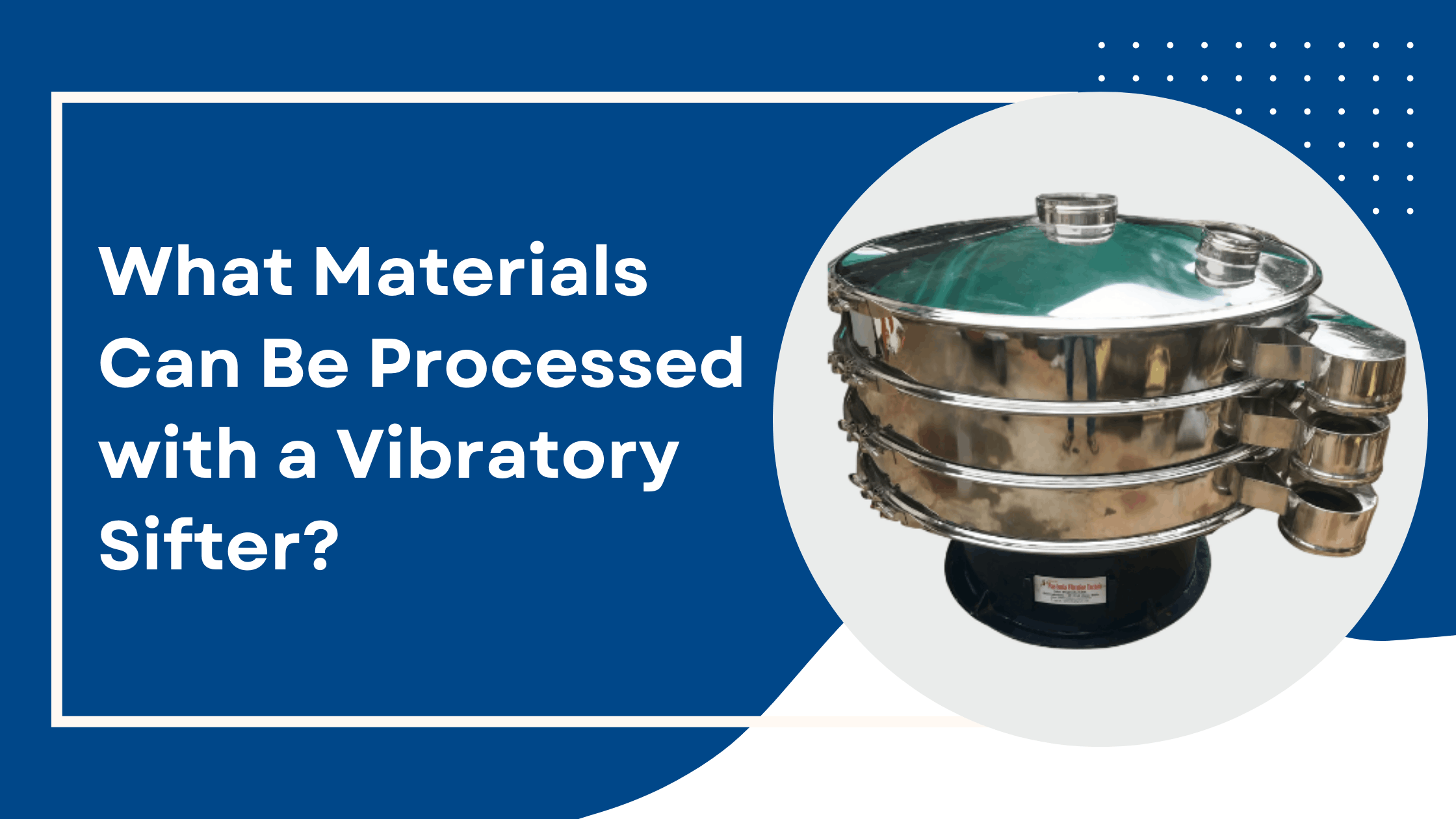
In modern manufacturing, accurate material separation is essential for maintaining product quality and meeting industry standards. From pharmaceuticals to food processing and chemicals, industries rely on efficient screening systems to remove impurities and control particle size. This is where a Vibratory Sifter plays a critical role.
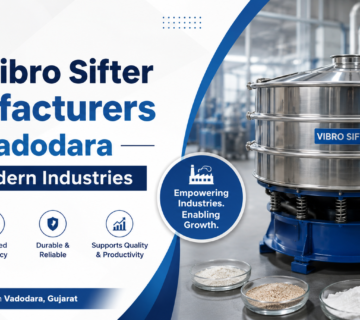
A Vibratory Sifter works on the principle of controlled vibration to separate materials based on particle size. Using specially designed mesh screens and balanced motors, it ensures uniform grading, improved product consistency, and reduced contamination. Because of its versatility, it has become a preferred solution across multiple sectors.
Let’s explore the wide range of materials that can be processed using this powerful screening equipment..
Understanding How a Vibratory Sifter Works
Before discussing materials, it’s important to understand the basic working principle. A Vibratory Sifter uses a motor with eccentric weights to generate multi-plane vibration. This vibration causes material to move across a mesh screen, allowing particles smaller than the mesh size to pass through while larger particles are separated.
This simple yet highly efficient mechanism makes the Vibratory Sifter suitable for handling a wide range of dry and wet materials across industries.
1. Pharmaceutical Materials
The pharmaceutical industry demands precision, hygiene, and compliance with strict regulatory standards. Even minor inconsistencies in particle size can affect drug effectiveness and safety.
In pharma manufacturing, a Vibratory Sifter is used for:
- Active Pharmaceutical Ingredients (APIs)
- Tablet granules
- Capsule filling powders
- Dry syrup formulations
- Excipients and fine chemical powders
When operating as a Vibro Sifter in Pharma, the equipment ensures uniform particle distribution, removes foreign particles, and supports GMP compliance. Stainless steel construction and dust-free operation make it ideal for cleanroom environments.
2. Food and Beverage Materials
Food processing requires contamination-free screening with consistent particle grading. A Vibratory Sifter is commonly used to process:
- Wheat flour and atta
- Sugar and icing sugar
- Spices and seasoning powders
- Salt
- Milk powder
- Coffee powder
- Cocoa powder
- Pulses and grains
The machine removes lumps, unwanted particles, and impurities while maintaining the natural quality of the product. In large-scale operations, an Industrial Vibro Sifter ensures continuous production without compromising hygiene standards.Food processing requires contamination-free screening to maintain hygiene and product texture. Consistent particle size directly affects taste, appearance, and packaging quality.
Food processors rely on a Vibratory Sifter to handle materials such as:
- Wheat flour and atta
- Sugar and icing sugar
- Spices and seasoning blends
- Salt
- Milk powder
- Coffee and cocoa powder
- Pulses and grains
In large-scale plants, an Industrial Vibro Sifter supports continuous production while ensuring that unwanted lumps or foreign particles are removed efficiently.
Chemical Industry Materials
The chemical industry often deals with fine powders, granules, and reactive compounds that require precise screening.
For chemical plants, a Vibratory Sifter helps process:
- Detergent powders
- Pigments and dyes
- Resin powders
- Fertilizers
- Silica and quartz powder
- Polymer granules
Accurate separation improves product consistency and reduces the risk of contamination. Many businesses prefer working with an experienced Vibro Sifter Machine Manufacturer to customize mesh sizes and machine configurations based on specific chemical properties.
Construction and Mineral Materials
In construction and mineral industries, screening plays a vital role in material consistency.
Common materials include:
- Cement
- Fly ash
- Sand
- Limestone powder
- Quartz powder
- Bentonite
- Gypsum
A Vibratory Sifter helps in grading materials for different applications such as plastering, concrete mixing, and tile adhesives. Accurate particle sizing improves structural strength and finishing quality.
Cosmetic and Personal Care Products
The cosmetic industry requires ultra-fine powders to maintain product smoothness and user comfort.
Common materials include:
- Talcum powder
- Face powder
- Herbal cosmetic blends
- Cosmetic pigments
- Clay mask powders
Fine screening eliminates lumps and enhances texture, ensuring that the final product meets consumer expectations for smoothness and quality.
Agricultural and Animal Feed Products
Agriculture and animal feed production also depend on effective screening systems to maintain product quality.
Materials commonly processed include:
- Animal feed pellets
- Feed powder mixtures
- Seeds
- Grain blends
- Fertilizer granules
Proper separation ensures nutritional consistency and prevents oversized or undersized particles from affecting product performance.
Wet Materials That Can Be Processed
Screening is not limited to dry powders. Modern screening systems are also capable of handling semi-solid and wet applications.
These may include:
- Ceramic slurry
- Paint mixtures
- Liquid chemicals
- Food pastes
- Starch solutions
With the right mesh and configuration, such systems act as filters, ensuring smooth consistency and impurity removal before further processing.
Why Industries Prefer a Vibratory Sifter
Industries choose this equipment because of:
- High screening accuracy
- Low maintenance requirements
- Compact design
- Multi-deck screening capability
- Easy cleaning and mesh replacement
- Energy efficiency
Selecting a reliable Vibro Sifter Machine Manufacturer ensures long-term durability and performance. Companies like Pan India Vibration Technic focus on delivering customized solutions tailored to specific industry requirements.
Choosing the Right Vibratory Sifter for Your Material
Selecting the appropriate screening solution depends on several factors. When selecting a Vibratory Sifter, factors such as mesh size, production capacity, material density, and moisture content must be considered.
Industries with high production volumes may opt for multi-deck configurations for simultaneous grading. In pharmaceutical and food sectors, hygiene standards and ease of cleaning are critical. Reputable manufacturers like Pan India Vibration Technic offer customized solutions designed to meet specific operational requirements.
Conclusion
From pharmaceuticals to food, chemicals to construction, the range of materials that can be processed with a Vibratory Sifter is remarkably wide. Its ability to handle powders, granules, slurries, and specialty materials makes it one of the most versatile screening machines in industrial operations.
Whether you operate in food manufacturing, chemical processing, or require a reliable Vibro Sifter in Pharma, choosing the right configuration ensures consistent quality and operational efficiency. Investing in the right screening solution ultimately leads to better product standards and smoother production workflows.
Frequently Asked Questions (FAQs)
1. Can this equipment handle both fine and coarse materials?
Yes, by selecting the appropriate mesh size, it can process both fine powders and larger granules efficiently.
2. Is it suitable for pharmaceutical applications?
Absolutely. It is widely used in pharmaceutical production for grading powders and granules under strict hygiene standards.
3. Can wet materials be screened?
Yes, certain models are designed to handle slurries and semi-solid materials effectively.
4. How do I choose the correct mesh size?
Mesh size depends on your desired particle size distribution and final product requirements.
5. Which industries commonly use this equipment?
Pharmaceutical, food processing, chemical, cosmetic, agriculture, and construction industries frequently use it for material separation.

No comment